SKU: 8772349333
aglaonema red peacock care

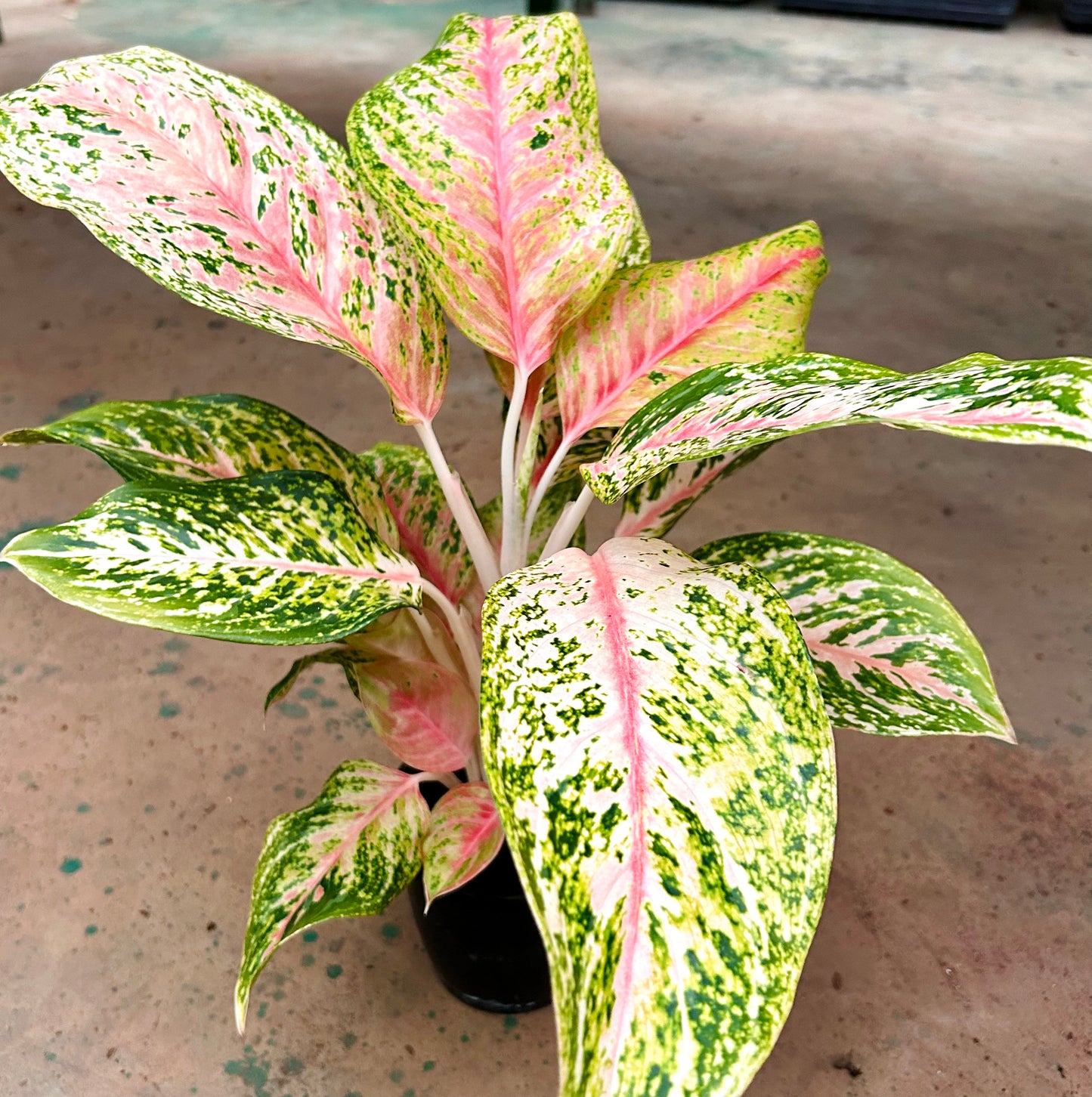
aglaonema red peacock care Aglaonema Peacock – Dream Green

Sale price$18.99 Regular price$21.10
Save 10%

Pay in installments of $5.28 with ShopPay, AfterPay and Klarna

Shipping Estimate
USA
  • USA
  • CAN

Ships within 48 hours · Estimated delivery Sep 18 - Sep 23

Promo Codes Available:

For Your Every Summer RSVP, with Code: SUMMER15

Description

aglaonema red peacock care Aglaonema Peacock – Dream GreenPRODUCT SPECIFICATIONS Plant Aglaonema Peacock Pot Height 4 Pot Diameter 4 Plant Height 6" 10" Growing Medium Soilless Cocopeat NPK medium Product Weight 250 grams KNOW YOUR PLANT Aglaonema 'Peacock' is a stunning cultivar of the Aglaonema plant, also known as the Chinese Evergreen. It's named 'Peacock' because of its striking, variegated foliage that resembles the colors and patterns found in a peacock's tail feathers. This variety is popular for its

PRODUCT SPECIFICATIONS


Plant

Aglaonema Peacock

Pot Height

4”

Pot Diameter

4”

Plant Height

6"-10"

Growing Medium

Soilless Cocopeat NPK medium

Product Weight

250 grams


KNOW YOUR PLANT

Aglaonema 'Peacock' is a stunning cultivar of the Aglaonema plant, also known as the Chinese Evergreen. It's named 'Peacock' because of its striking, variegated foliage that resembles the colors and patterns found in a peacock's tail feathers. This variety is popular for its unique and vibrant appearance.

The leaves of Aglaonema 'Peacock' typically feature various shades of green with silver, cream, and light green markings, creating a peacock feather-like pattern. This eye-catching and colorful foliage makes it a popular choice among indoor plant enthusiasts.


BENIFITS

  • Air purifiers: These plants are known to be excellent air purifiers as proven beyond doubt by NASA researches. They remove various toxins from the air and improve air quality by emitting oxygen.
  • SAM-free: We use a special weightless SAM (Soil and manure free) mix. It has a superior drainage prevents plants dying due to overwatering. Also, pest attacks are rare in our potting mix.


PLANT CARE

  • Light: Aglaonema prefers moderate to low indirect light. Avoid exposing it to direct sunlight, as it can scorch the leaves. Place it in a well-lit room away from direct sunlight or use sheer curtains to filter the light.
  • Temperature: These plants prefer temperatures between 65°F to 80°F (18°C to 27°C). Avoid exposing them to drafts or sudden temperature changes.
  • Watering: Allow the top inch (2.5 cm) of the soil to dry before watering. Overwatering can lead to root rot, so it's essential to let the soil partially dry between watering. Water sparingly in winter, as the plant's growth slows down during that time.
  • Humidity: Aglaonema prefers higher humidity levels, but it can tolerate normal indoor humidity. You can increase humidity by misting the leaves occasionally or using a humidifier.
  • Soil: Use a well-draining potting mix that retains some moisture but doesn't become waterlogged. A mix of peat moss, perlite, and vermiculite usually works well.
  • Fertilization: Feed your Aglaonema with a balanced liquid fertilizer during the growing season (spring and summer) about once a month. In winter, you can reduce or stop fertilizing.
  • Pruning: Remove any yellow or damaged leaves regularly to keep the plant looking neat. You can also trim leggy stems to encourage bushier growth.
  • Pests and Diseases: Aglaonema is generally resistant to pests, but it's always good to inspect your plant regularly for any signs of common houseplant pests like spider mites or mealybugs. If you notice any issues, treat them promptly with appropriate measures.

Remember that different plants may have slightly different care requirements, so it is a good idea to observe your plant and adjust its care accordingly. Overall, with proper care, Aglaonema can be a beautiful and long-lasting addition to your indoor space.


BENIFITS

  • SAM-free: We use a special weightless SAM (Soil and manure free) mix. It has a superior drainage prevents plants dying due to overwatering. Also, pest attacks are rare in our potting mix.
  • Air Purification: Aglaonema is known for its air-purifying properties. It helps remove indoor air pollutants like formaldehyde, benzene, and other toxins, thereby improving the air quality in your home or office.
  • Low Maintenance: This plant is relatively easy to care for, making it an excellent choice for both beginner and experienced plant enthusiasts. It can tolerate a range of light conditions and does not require frequent watering.
  • Attractive Foliage: Aglaonema has attractive, variegated leaves with different patterns of colors, including shades of green, silver, pink, and red. The striking foliage adds a touch of beauty and vibrancy to any room.
  • Adaptable to Indoor Spaces: Aglaonema can thrive in indoor environments, including low light areas, where many other plants struggle to grow. It's a great option for spaces with limited natural light.
  • Health Benefits: Studies have shown that having indoor plants, like Aglaonema, can reduce stress, boost mood, and enhance overall well-being. They create a calming and positive atmosphere in living and working spaces.
  • Non-Toxic: Aglaonema is non-toxic to pets, making it a safer choice for households with cats, dogs, or other animals that may be curious about plants.
  • Long-Lasting: With proper care, Aglaonema can be long-lasting and remain attractive for many years, making it a worthwhile investment for indoor décor.

Overall, Aglaonema is not only a beautiful decorative plant but also offers practical benefits by purifying the air and contributing to a healthier and more pleasant living environment.


USEFUL TIPS

  • Light: Place your Aglaonema in bright, indirect light. It can tolerate lower light conditions, but to maintain the red coloration in its leaves, it's essential to provide sufficient light without exposing it to direct sunlight, which can cause leaf burning.
  • Watering: Allow the top inch (2.5 cm) of the soil to dry before watering. Aglaonema prefers slightly moist soil but not soggy conditions. Overwatering can lead to root rot and affect the plant's health and color.
  • Humidity: Aglaonema appreciates higher humidity levels, so if the air in your home is dry, consider using a humidifier or placing a tray of water near the plant to increase humidity. Misting the leaves occasionally can also be beneficial.
  • Temperature: Maintain a consistent room temperature between 18°C to 27°C. Avoid exposing the plant to drafts or extreme temperature fluctuations.
  • Fertilization: Feed your Aglaonema with a balanced liquid fertilizer every 4-6 weeks during the growing season (spring and summer). Fertilizing helps provide essential nutrients for vibrant leaf colors.
  • Pruning: Regularly remove any yellow or damaged leaves to keep the plant looking tidy and to redirect its energy towards healthy growth and maintaining its red foliage.
  • Re-Potting: Aglaonema grows relatively slowly, so it won't require frequent re-potting. However, if you notice the plant becoming


COMMON PROBLEMS AND SOLUTIONS:


  • Overwatering or Underwatering: Overwatering can lead to root rot and yellowing leaves, while underwatering can cause wilting and leaf browning. Ensure you water your Aglaonema when the top inch of soil is dry, and use well-draining soil to prevent waterlogged conditions.
  • Yellowing Leaves: Yellowing leaves can be a sign of overwatering, underwatering, or aging. If only the older leaves are turning yellow, it's likely a natural part of the plant's growth process. Otherwise, check the soil moisture and adjust your watering accordingly.
  • Brown Leaf Edges: Brown leaf edges, also known as leaf burn, can result from exposure to direct sunlight or low humidity levels. Move the plant to a spot with indirect light and increase humidity by misting or using a humidifier.
  • Pests: Aglaonema can occasionally attract pests like spider mites, mealybugs, and scale insects. Inspect your plant regularly and use appropriate insecticidal soap or neem oil to eliminate the pests.
  • Root Rot: Root rot can occur due to overwatering and poorly draining soil. If you notice mushy, discolored roots, it's a sign of root rot. Trim away affected roots and repot the plant in fresh, well-draining soil.
  • Drooping Leaves: Drooping leaves can result from both overwatering and underwatering. Check the soil moisture and adjust your watering routine accordingly.
  • Brown Spots on Leaves: Brown spots on leaves can be caused by inconsistent watering, low humidity, or fungal issues. Maintain a regular watering schedule and ensure adequate humidity to prevent these problems.
  • Pale or Faded Leaves: Lack of light can cause the leaves to lose their vibrant colors. Ensure your Aglaonema receives enough indirect light to maintain its variegation.

Regularly inspect your Aglaonema for any signs of these common problems, and take appropriate actions promptly to ensure the plant remains healthy and visually appealing. Proper care, including correct watering, adequate lighting, and suitable humidity levels, will help prevent most issues and keep your Aglaonema thriving.


HAPPY PLANT PARENTING!!

Disclaimer: Actual plant may have slight variations from what is shown in the image since each individual plant has its own appearance. 


Shipping Notes
  • Free Standard Shipping on $100+ Orders to the USA.
  • Except Preorder products are shipped in 48 hours.
  • Delivery to the USA:
  1. Standard Shipping : 3-10 business days
  • If time is of the essence, please consider selecting expedited delivery for faster service.
Exchange/Return Notes
  • We offer a 30-day return/exchange service after receiving.
  • Final sale items are not eligible for returns or exchanges.
  • To process your return/exchange, please contact us at [email protected]
  • Please click here for more details>>> Return & Exchange Policy
SKU: 8772349333

Discover Niche Categories That Outsell aglaonema red peacock care

Top-Converting Item to Boost Your Average Order

4.5 ★★★★★
Based on 5 reviews
Sort
Highest Rating
Newest First
Oldest First
Product Reviews
G
Verified Purchase
Geddes J
New York, US
★★★★★ 4
Good History Book
Format: Kindle
Twenty years that change history and the Americas. Even though the civil war ended slavery at a humongous cost, it it failed to bring social justice a d civil rights to the population of the country. It was not until 1920 that women were granted voting rights. And some problems and divisions persist nowdays.
WAS THIS REVIEW HELPFUL?YesReportShare
Reviewed in the United States on July 2, 2024
I
Verified Purchase
Ian R
Alexandria, US
★★★★★ 5
interesting and fresh perspective on the American civil war
Format: Kindle
Fresh perspective on the well known American Civil War. I appreciate Dr Taylor’s emphasis on the preservation of slavery over the states’ rights argument for why the American Civil War was fought.
WAS THIS REVIEW HELPFUL?YesReportShare
Reviewed in the United States on June 1, 2024
G
Verified Purchase
gloine36
Pawtucket, US
★★★★★ 5
A Masterpiece by the most Influential Historian of the 20th Century
Format: Paperback
The late Edmund Morgan may very well have been the most influential American historian of the 20th century. So much of what he wrote has had a definitive impact on the field of American history that he literally stands above the rest of his peers. Few historians can claim to have changed how we view the founding of America, and Morgan is one of that very select company. In American Slavery, American Freedom Morgan managed to alter the relationship of slavery to America. While he was primarily writing about colonial Virginia, he explored the issue of slavery and illustrated how the colonial Virginians used racism to develop the form of chattel slavery that rose here in the colonies during the 17th century. Often as we teach our history courses our students will invariably answer the question about why people came to the colonies with the statement, "People wanted to be free." Yet, we know from the records that most people who came to Virginia were anything but free. The facts are there and have always been there proving this, yet few speak about it because it conflicts with American heritage. Morgan shattered that illusion in this book. He showed that colonial Virginia was the exact opposite of freedom and that many people in the 17th century were forced to go there. In addition he showed how thousands of people died in Virginia from various causes during the first half of the century. He also investigated the role of class in colonial Virginia and how those in power sought to use the colonial government to retain that power for themselves and similar people. At times this ran contrary to what the English monarchs wanted in their colonies, but the upper class of Virginia managed to overcome obstacles and stay in power. Morgan did this by examining the records of the colony including the laws as they were enacted. He found that many laws were designed to help those with money at the expense of those without. He also found where the laws changed and became race conscious which he interpreted as the sign that the upper class was making a clear distinction between white and black in order to create the classic Us vs. Them division. This division would be the racist wedge used to keep poor whites of the lower class from associating with the blacks of any class and to reinforce the status of slavery on all blacks. This book won the Francis Parkman award and is regarded as an American history classic. One of the great things about Morgan was that his writing was wonderful and academic at the same time. Notes are given to the reader on each page via footnotes and reveal the great depth of research that Morgan used to develop this topic. It is a must read even today for anyone studying the history of Virginia. It is also a wonderful example of what a history book should be in its style and literary quality. Morgan's appendix does make one wonder what would have happened had he developed a quantification theory to go with his topic. The data results would probably have reinforced his conclusion. The appendix is an early use of that type of approach and shows that Morgan's conclusion would have been validated by quantification. All in all this book is a must read for any scholar of Virginia, colonial America, or slavery. Reading it will help the student develop a deeper contextual feeling for how colonial Virginia developed and a greater understanding as to why certain things in this country came about. The theme of racism has been existent in America for centuries and Morgan showed us exactly why that was. This book is a must have in my collection and many others for its high quality of research.
WAS THIS REVIEW HELPFUL?YesReportShare
Reviewed in the United States on October 9, 2013
W
Verified Purchase
Wald1900
Whiting, US
★★★★★ 5
Fascinating Insights into the Origins of American Racism
Format: Paperback
This is a fantastic, must read book for anyone interested in the origins of American racism. Morgan recounts the cultural, economic and political evolution of the 17th and early 18th century Virginia, and with it, makes comprehensible the reasons why racial slavery emerged as an integral component to the development of the white community's pre-revolutionary ideals of independence and liberty. At the founding of the Jamestown colony in 1607, Virginia offered vast tracts of land available to anyone willing to make the trip and who could survive their first season (or two or three) in the New World. Unlike in England where opportunities for land ownership were constrained, the fact that Virginia land was to be had for the taking made the economic equation simple - more labor = more profits. To provide this labor, England's surplus poor (of which there was an overabundance) were sent to Virginia as indentured servants for a period of four to seven years in order to work off the costs of their relocation. Once their indenture period was over, they were free.....and poor. Over time, as established interests grabbed more and more of the land, opportunities for released bondsmen decrease, essentially creating an ever-growing class of destitute (and thoroughly despised) whites who threatened the social and political stability of the colony. Racial slavery was introduced over time to stem this proliferation of poor whites, who, after having served the term of their indenture, were free to be a "blight" on the community. These planter elites were also constantly at political war with a succession of governors appointed by the crown to manage the affairs of the colony in a manner most beneficial to the king. By enfranchising poor whites and enlisting their support for the colonial assembly, the elites were able to exercise political power over affairs of the colony in a manner most beneficial to the colonists, rich and poor alike. The result of these forces caused a major adjustment in white social strata - the role of detested poor who would only work under the threat of the lash was imposed upon enslaved blacks, and poor whites were elevated to the level of political partners with the elites. This simultaneously endowed all whites with a fierce sense of entitlement over their political rights and the prerogatives of power on the one hand, and contempt for their black slaves on the other. Liberty and equality came to be seen as inalienable birthrights while slavery was the means by which the "shiftless, lazy, indolent" poor could be transformed from burdens on society to positive (albeit brutally coerced) contributors. In other words, Virginia whites came to think of blacks with the same sense of scorn and contempt that English aristocrats held for the poor in England while, at the same time, assuming as a birthright the same sense of political entitlement enjoyed by the elite class in England. It was this, to our modern eyes, bizarre combination of egalitarian and tyrannical ideals that informed and inspired Jefferson, Washington and Madison (among others) as they participated in the formation of what would become the United States. The implication of this history on modern political discourse is obvious. Those who today passionately cite the liberty-loving ethos of the founding fathers while simultaneously exhibiting contempt for the poor are only looking at one side of the equation. For the Virginians, slavery and liberty went hand in hand; without the one there could not have been the other. A full, rich and nuanced understanding of our heritage compels us to recognize the human inclination to despise and exploit the powerless with the same vigor and passion that we celebrate the ennobling power of freedom. On a final note of criticism - while the book does a masterful job of making the origins of colonial racism comprehensible, it does so at the expense of "black experience" narratives. The story addresses issues of slavery only to the extent of discussing laws passed throughout the pre-revolutionary period in order to institutionalize it and the effect these laws had on the attitudes of whites towards blacks. I started the book expecting a far deeper dive in this area, and was disappointed by how little was presented concerning the evolution of slavery throughout the 17th century from a black perspective. After having read the book, I concede that this deeper dive was not strictly necessary in order for the author to prove his thesis, yet it would have been a stronger work had greater efforts in this area been made.
WAS THIS REVIEW HELPFUL?YesReportShare
Reviewed in the United States on February 23, 2013
R
Verified Purchase
Reader KA
Waukegan, US
★★★★★ 5
Great Historical Reading
Format: Paperback
I found "American Slavery, American Freedom" to be a thought-provoking book that contained a great deal of useful information. I wrote in the margins of the book, took notes, and highlighted entire pages. "American Slavery, American Freedom" was well-written and enjoyable to read. I had read countless books on slavery over the years. This book did not focus primarily on slavery. A detailed description of the steps and events that led to the creation of the Commonwealth of Virginia can be found in "American Slavery, American Freedom." The history of Virginia is characterized by slavery and servitude. Since many of the books I had read on slavery lacked a compelling backstory, I found this book refreshing. As far as I can tell, the author denied or downplayed the fact that Thomas Jefferson fathered many children with a slave named Sally Hemmings. The author probably worked on this book for years before its publication in 1975. There was a possibility that Edmund Morgan did not want to write about any "touchy" topics. "American Slavery, American Freedom" was a pleasure to read. I would recommend it to others.
WAS THIS REVIEW HELPFUL?YesReportShare
Reviewed in the United States on September 30, 2020

recommand products